
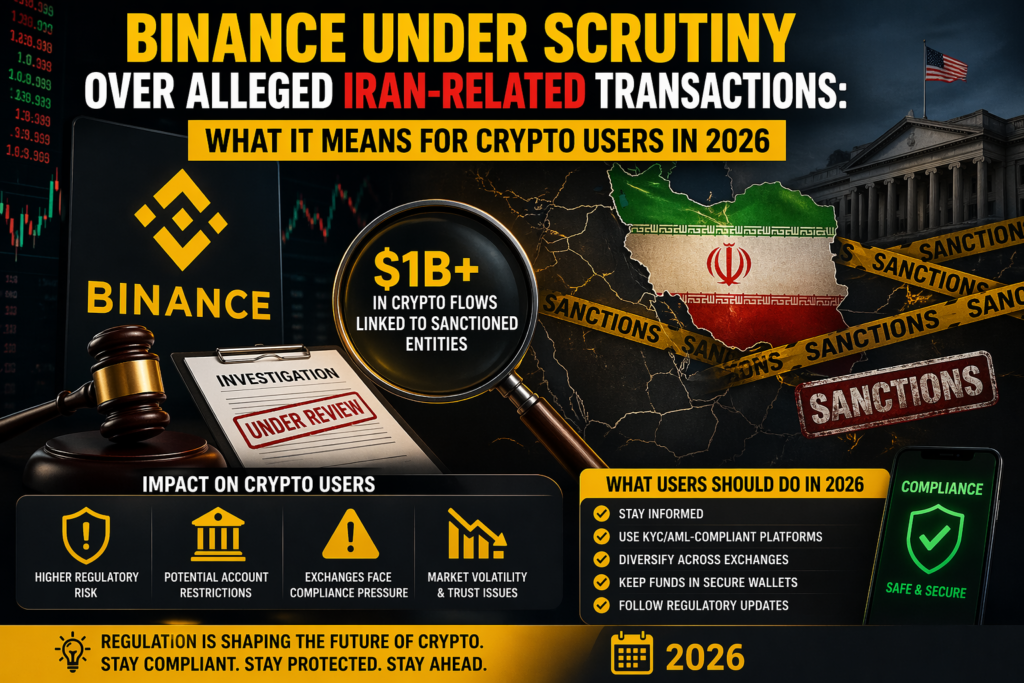
The cryptocurrency world is once again under the spotlight, and this time, the focus is on Binance, the world’s largest crypto exchange. Reports suggest that Binance is facing serious scrutiny over alleged Iran-related transactions, raising questions about compliance, transparency, and the future of crypto regulation. If you’re a crypto user or investor, this isn’t just another headline—it could directly impact how you trade, store, and manage your digital assets.
Recent investigations indicate that billions of dollars in cryptocurrency transactions may have been linked to Iranian entities through Binance’s platform. This has triggered alarms among regulators, lawmakers, and financial watchdogs worldwide. So what’s really going on? And more importantly, should you be concerned?
Let’s break it down in a simple, clear, and practical way.
Background of Binance and Its Regulatory History
Previous Legal Issues and Settlements
To understand the current situation, you need to look at Binance’s past. The exchange has already faced significant regulatory challenges, including a massive settlement with U.S. authorities in 2023 over anti-money laundering and sanctions violations. This settlement forced Binance to improve its compliance systems and operate under stricter oversight.
Despite these efforts, critics argue that the company has struggled to fully align with global financial regulations. That’s partly because Binance operates across multiple jurisdictions, each with its own rules and enforcement standards. This creates a complex compliance environment where even small gaps can lead to major issues.
Global Expansion and Compliance Challenges
Binance’s rapid global expansion has been both its strength and its weakness. While it allowed the platform to dominate the crypto market, it also exposed it to regulatory scrutiny in multiple countries. Managing compliance across borders isn’t easy, especially in a fast-moving industry like cryptocurrency.
Think of it like running a global airline without consistent rules across airports—it only takes one weak checkpoint for problems to arise.
What Are the Iran-Related Allegations?
Volume of Transactions Linked to Iran
At the heart of the controversy are claims that over $1 billion to $1.7 billion in cryptocurrency transactions were linked to Iranian entities. These transactions reportedly occurred between 2024 and 2025 and may have involved networks connected to sanctioned organizations.
In some reports, internal investigations uncovered suspicious flows that had gone unnoticed or unaddressed for extended periods. That raises a critical question: Were these transactions accidental oversights, or signs of deeper compliance failures?
Role of Stablecoins and Blockchain Networks
Interestingly, many of these transactions allegedly involved stablecoins like USDT (Tether) running on the Tron blockchain. Stablecoins are popular because they offer price stability, making them ideal for large transfers.
But here’s the catch: their efficiency also makes them attractive for bypassing traditional financial systems. This is why regulators are increasingly focusing on stablecoin transactions when investigating sanctions evasion.
Internal Investigations and Whistleblower Claims
Compliance Team Findings
Reports suggest that Binance’s internal compliance team identified suspicious activity linked to Iran. These findings included large transaction volumes and patterns that raised red flags.
In a well-functioning system, such alerts would trigger immediate action. However, the situation appears to be more complicated here.
Allegations of Staff Dismissals
Some investigations claim that employees who flagged these issues were dismissed or sidelined. This has sparked controversy, as it raises concerns about whether compliance teams are empowered—or suppressed—within large crypto organizations.
Binance, however, strongly denies these claims, stating that no staff were fired for raising compliance concerns.
So who’s telling the truth? That’s exactly what regulators are trying to determine.
Binance’s Response to the Allegations
Official Statements and Denials
Binance has consistently denied wrongdoing. The company claims that:
- It did not violate sanctions laws
- Its compliance systems are working effectively
- Suspicious activity was detected and reported appropriately
The exchange also emphasizes that it conducts internal and external reviews to ensure compliance.
Legal Actions Against Media Reports
In a bold move, Binance has even taken legal action against media outlets for what it calls “inaccurate reporting.” This indicates that the company is not just defending itself—it’s actively pushing back.
This legal strategy could shape how future crypto investigations are reported and perceived.
Government and Regulatory Reactions
U.S. Senate Inquiry
U.S. Senator Richard Blumenthal has launched a formal inquiry into Binance’s operations. He is seeking detailed information about:
- Iran-linked transactions
- Internal compliance processes
- Possible misrepresentations to authorities
This level of scrutiny shows that lawmakers are taking the issue seriously.
Department of Justice Investigation
The U.S. Department of Justice is also investigating whether Binance was used to bypass sanctions and fund Iranian networks. This could lead to significant legal consequences if violations are confirmed.
When multiple government agencies get involved, it’s usually a sign that the stakes are high.
Impact on the Crypto Industry
Trust and Transparency Issues
This controversy is more than just a Binance problem—it affects the entire crypto ecosystem. Trust is the backbone of any financial system, and allegations like these can shake investor confidence.
If users start doubting the integrity of exchanges, they may move their funds elsewhere or exit the market entirely.
Increased Regulatory Pressure
Regulators are likely to tighten rules around:
- Know Your Customer (KYC) procedures
- Transaction monitoring
- Cross-border crypto transfers
This could make crypto platforms safer—but also more restrictive.
Risks for Crypto Users
Security and Compliance Risks
If an exchange is under investigation, users may face risks such as:
- Account freezes
- Withdrawal delays
- Increased verification requirements
Even if you’re not involved in any wrongdoing, you could still be affected.
Potential Account Restrictions
In extreme cases, accounts linked to suspicious activity may be restricted. This is why it’s crucial to use platforms that prioritize compliance and transparency.
Practical Tips for Crypto Investors
How to Stay Safe on Exchanges
Here are some simple steps you can take:
- Use exchanges with strong regulatory compliance
- Enable two-factor authentication (2FA)
- Avoid large transactions without verification
- Keep most funds in cold wallets
These steps can significantly reduce your risk.
Choosing a Compliant Platform
Before choosing an exchange, ask yourself:
- Is it regulated in major jurisdictions?
- Does it have a clear compliance policy?
- Has it faced major legal issues recently?
Doing a little research can save you a lot of trouble later.
Future Outlook for Binance and Crypto Regulation
The future of Binance depends largely on the outcome of ongoing investigations. If the company clears its name, it could regain trust and continue leading the market. But if violations are confirmed, it may face stricter penalties and operational restrictions.
For the broader crypto industry, this could be a turning point. Expect tighter regulations, improved compliance systems, and increased transparency requirements.
Conclusion
The scrutiny surrounding Binance and alleged Iran-related transactions highlights a critical issue in the crypto world: balancing innovation with regulation. While cryptocurrency offers incredible opportunities, it also comes with risks that cannot be ignored.
If you’re a crypto user, now is the time to be proactive. Stay informed, choose compliant platforms, and protect your assets. The landscape is evolving rapidly—and those who adapt will be in the best position to succeed.
FAQs
1. What are the allegations against Binance?
Binance is accused of facilitating over $1 billion in transactions linked to Iranian entities, potentially violating sanctions.
2. Has Binance admitted wrongdoing?
No, Binance denies all allegations and claims its compliance systems are effective.
3. Is Binance safe to use right now?
It remains operational, but users should stay cautious and follow best security practices.
4. What could happen if Binance is found guilty?
Possible outcomes include fines, stricter regulations, or operational restrictions.
5. How can I protect my crypto assets?
Use secure wallets, enable security features, and choose regulated exchanges
