
No More Free Water in Punjab Imagine turning on your tap and knowing every drop of water is being tracked. Sounds surprising, right? That’s exactly what’s happening in Punjab as the government moves toward ending free water supply and introducing a new water meter system. This shift is not just about billing—it’s about conservation, accountability, and preparing for a future where water may not be as abundant as we think.
Water has long been taken for granted in many parts of Punjab. But with rising population, climate change, and increasing demand, authorities are stepping in with a bold solution. So, what does this new system really mean for households, farmers, and businesses? And more importantly, how will it affect you?
Why Punjab Is Ending Free Water Supply
The decision to stop free water isn’t random—it’s driven by real challenges. Punjab has been facing water scarcity issues, especially in urban areas where demand is growing faster than supply.No More Free Water in Punjab
For years, free or heavily subsidized water led to overuse. When something feels unlimited, people naturally use more than they need. This has resulted in:
- Depleting groundwater levels
- Wastage in households and agriculture
- Poor water management systems
By introducing a meter-based billing system, the government aims to encourage responsible usage. Think of it like electricity billing—once people see their usage reflected in bills, they tend to become more mindful.
What Is the New Water Meter System?
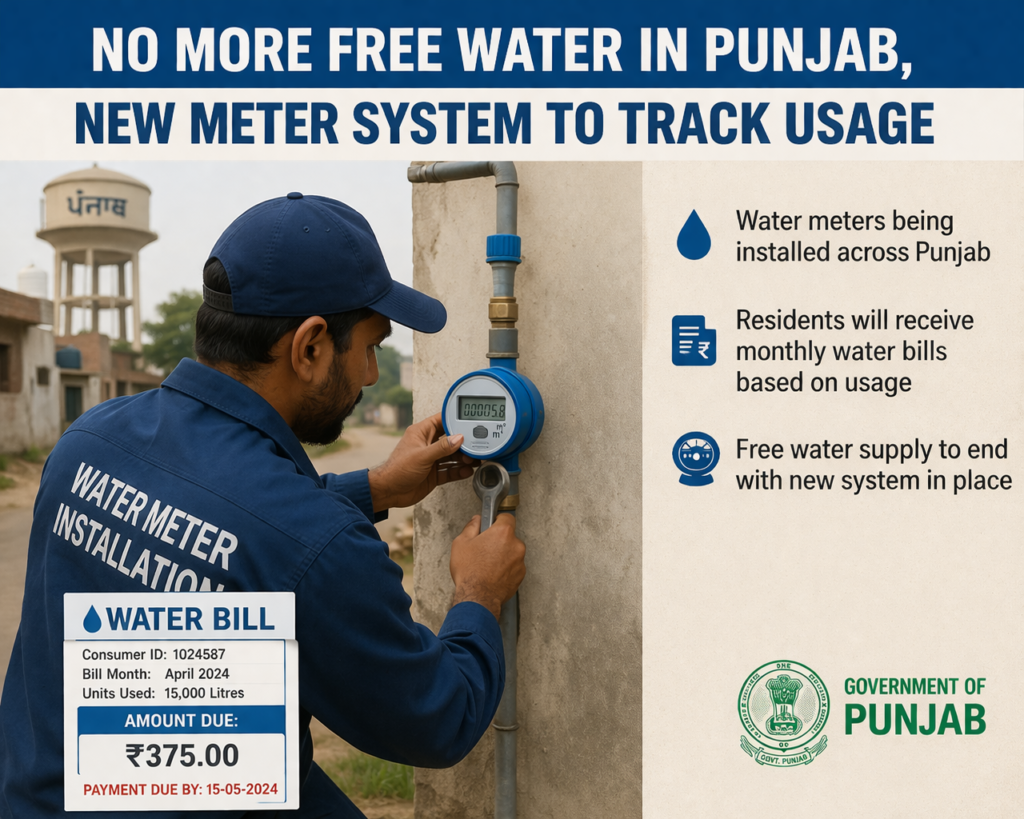
The new water meter system in Punjab is designed to monitor how much water each household or property consumes. These meters will be installed at individual connections, recording usage in real-time or at regular intervals.
Key Features of the System
- Accurate Measurement: Tracks exact water consumption per household
- Transparent Billing: Users pay based on actual usage
- Leak Detection: Helps identify wastage or pipe leaks early
- Data Monitoring: Authorities can analyze usage patterns for better planning
This system is not just about charging people—it’s about creating a smart water management ecosystem.
How Will It Work in Daily Life?
You might be wondering, “Will my daily routine change?” The short answer is—yes, but in a manageable way.
Once the meters are installed:
- Your water usage will be recorded regularly
- Bills will be generated based on consumption
- Higher usage means higher charges
- Lower usage can help you save money
For example, if a family uses water wisely—fixing leaks, avoiding unnecessary washing—they’ll notice a lower bill. On the other hand, excessive use will directly impact monthly expenses.
It’s similar to how people became more conscious after electricity meters were introduced. Over time, it becomes a habit.
Impact on Households
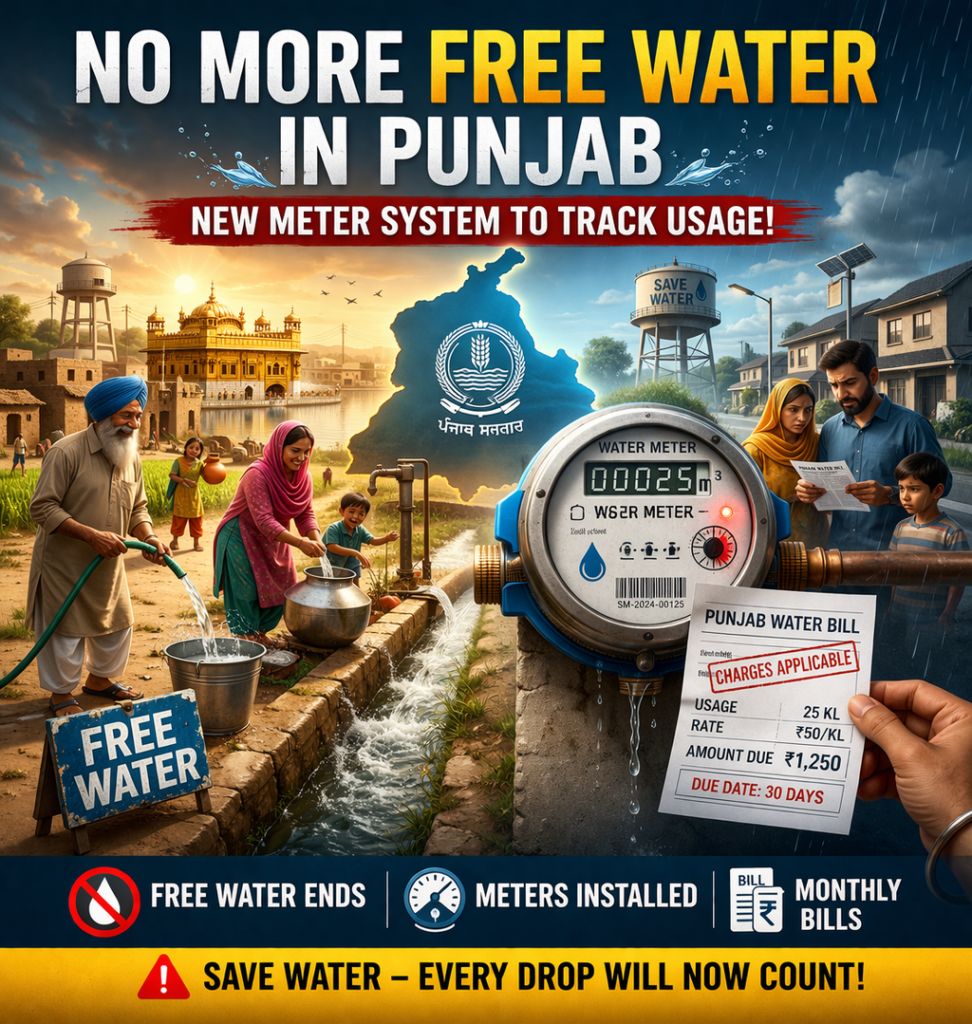
For households, this change may feel like a financial burden at first. But in reality, it can lead to better habits and long-term savings.
Positive Effects
- Encourages water conservation
- Reduces unnecessary wastage
- Promotes efficient use of resources
Challenges
- Increased monthly expenses for heavy users
- Initial adjustment period
- Awareness gap among residents
Imagine leaving the tap running while brushing your teeth. Earlier, it didn’t matter. Now, every drop counts—and that awareness can make a big difference.
Impact on Agriculture and Farmers
Punjab is known for its agriculture, and water plays a huge role in farming. The introduction of water meters could significantly affect this sector.
Farmers often rely on large quantities of water for irrigation. With metering:
- They may shift toward efficient irrigation methods like drip systems
- Crop selection might change to less water-intensive crops
- Water usage will become more strategic
This could actually be a positive step in the long run. Sustainable farming practices can protect groundwater levels and ensure future productivity.
Benefits of the New Water Meter System
The shift from free water to metered usage comes with several advantages:
| Benefit | Explanation |
|---|---|
| Water Conservation | Encourages responsible usage and reduces wastage |
| Fair Billing | People pay only for what they use |
| Improved Infrastructure | Helps authorities detect leaks and system inefficiencies |
| Sustainability | Protects water resources for future generations |
This system creates a balance—ensuring people have access to water while preventing misuse.
Challenges and Concerns
No major change comes without resistance. The new system has sparked concerns among the public.
Common Concerns
- “Will water become too expensive?”
- “What about low-income families?”
- “Is the infrastructure ready?”
These are valid questions. The government will need to ensure:
- Affordable pricing for basic needs
- Subsidies or support for vulnerable groups
- Proper installation and maintenance of meters
Without addressing these issues, the transition could face backlash.
Practical Tips to Reduce Water Bills
Now that water usage will be tracked, saving water isn’t just good for the environment—it’s good for your wallet too.
Simple Steps You Can Take
- Fix leaking taps immediately
- Turn off water while brushing or washing dishes
- Use buckets instead of running hoses
- Install water-efficient fixtures
- Reuse water where possible (like for plants)
These small changes can significantly reduce your monthly bill.
Real-World Example: Why Metering Works
Cities around the world have already adopted water metering systems, and the results are impressive. In many cases, water consumption dropped by 20% to 30% after meters were introduced.
Why does this happen? Because awareness drives behavior. When people see numbers—liters used, money spent—they naturally adjust.
Punjab is now following a similar path, aiming to create a more sustainable future.
Will This Change Be Permanent?
All signs point to yes. The introduction of water meters is part of a long-term strategy to manage resources efficiently.
Water is no longer seen as an unlimited resource. With climate challenges increasing, such systems are likely to become the norm—not just in Punjab, but across other regions as well.
Conclusion
The end of free water in Punjab marks a significant shift in how we view and use one of our most essential resources. The new water meter system is not just about billing—it’s about responsibility, sustainability, and preparing for the future.
Yes, the transition may feel challenging at first. But it also brings an opportunity to rethink habits, reduce wastage, and contribute to a larger environmental goal.
So, the real question is—are you ready to change how you use water?
FAQs
1. Why is Punjab introducing water meters?
To reduce water wastage, improve resource management, and ensure fair billing based on actual usage.
2. Will water bills increase significantly?
It depends on your usage. Efficient users may pay less, while excessive users will see higher bills.
3. Are there any subsidies for low-income households?
Policies may include support measures, but details will depend on government implementation.
4. How can I reduce my water bill?
By fixing leaks, using water-efficient methods, and avoiding unnecessary usage.
5. Is this system permanent?
Yes, it is part of a long-term strategy for sustainable water management.
